
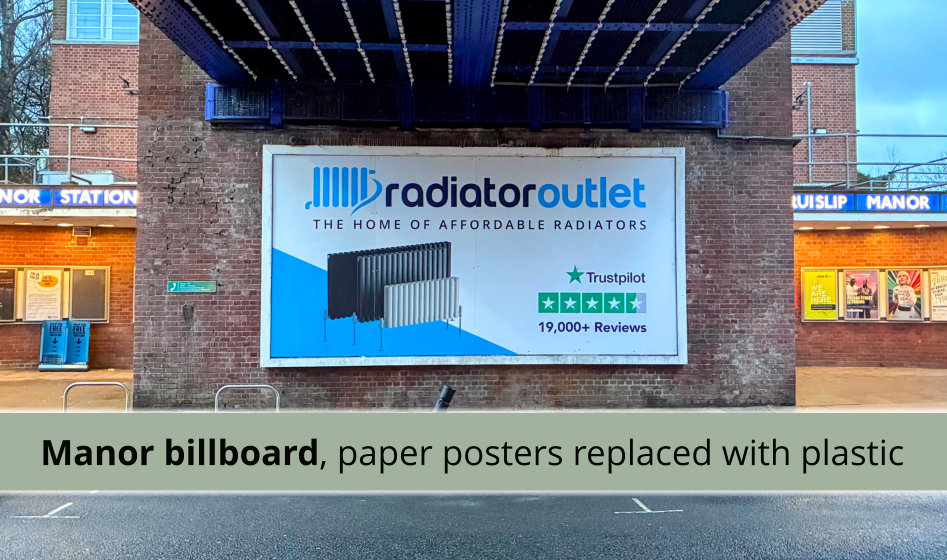
We looked into why Global Media is screwing plastic boards under the railway bridge instead of pasting paper – and the answer might surprise you.
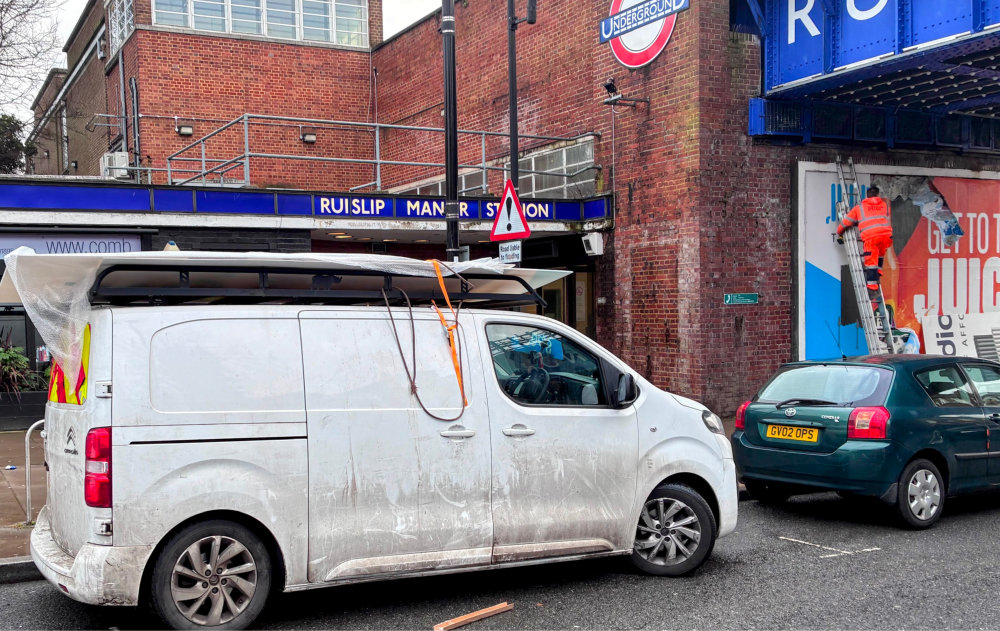
If you passed the large advertising board under the railway bridge at Ruislip Manor station in the last couple of months you might have noticed that the advertising billboard on the station entrance side of the road is a bit different. One Sunday morning in January, instead of using the usual buckets of paste and brushes to put up a new poster, a van arrived to screw rigid plastic panels directly onto the frame.
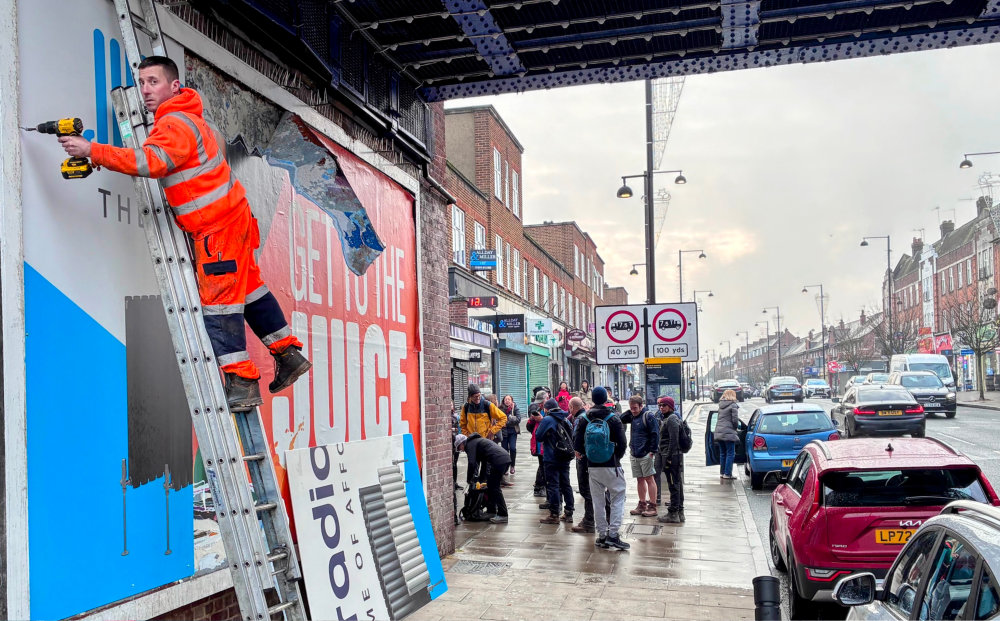
On seeing the installation, it raised a question in an era of reducing waste, why are we switching from paper to plastic?
It turns out, what looks like “more plastic” is actually part of a pioneering new recycling scheme.
The “Closed-Loop” Revolution
The billboard under Ruislip Manor bridge on Victoria Road is owned by Global, one of the UK’s largest media companies. According to industry reports, Global has partnered with Corplex (a manufacturer) and The Delta Group to solve a major problem in outdoor advertising: the waste.
Traditionally, billboards use paper soaked in heavy-duty glue. Once the campaign is over, that glue-saturated paper (or “blueback”) is notoriously difficult to recycle. It often ends up incinerated or in landfill because the adhesive gums up recycling machinery.
From Ruislip to Gloucester and back again
The new plastic boards (known as Correx) are part of a “closed-loop” system.
- De-inking: Unlike the old method, these boards aren’t thrown away. When the ad changes, the boards are taken down and shipped to a specialized facility in Gloucester.
- Recycling: There, they are shredded, washed, and then de-inked.
- Rebirth: The clean plastic is then turned into fresh boards with up to 70% recycled content.
Why It Matters
According to the manufacturers, this process cuts the carbon footprint of these signs by 80%. For our local area, it also means the signage is more durable. The rigid plastic stands up to wind and rain much better than paper, meaning no more peeling, tatty posters flapping in the wind.
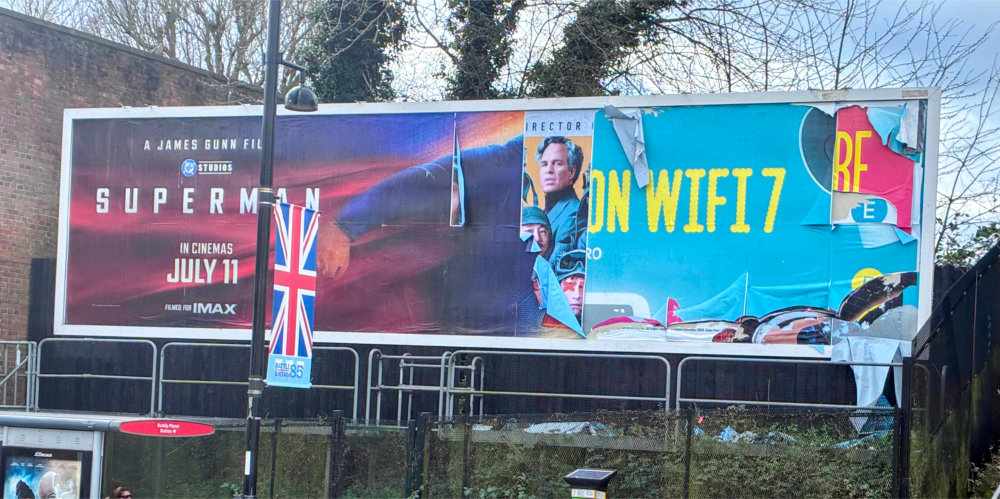 The large billboard between the railway line and the steps to Pembroke Gardens carpark is looking somewhat worse for wear these days – multiple layers of blueback and glue have given way!
So, while seeing plastic screwed to a wall might look like a step backward, it represents a shift toward a system where materials are reused rather than scraped off and thrown away.
Why is “Paper” Bad for the Environment?
It seems obvious that paper should be greener than plastic. However, the paper used for outdoor advertising—known in the trade as “Blueback”—is a different beast entirely. Here is why it is so difficult to recycle:
- It is Chemically Treated (“Wet Strength”)
Normal paper dissolves in water (think of a newspaper left in a puddle). If billboard paper did that, it would slide off the wall in the first rainstorm. To prevent this, manufacturers treat Blueback paper with wet-strength resins (chemicals similar to plastic). This makes it durable in the rain, but also means it won’t break down in a paper recycling mill’s pulping machine. - The “Blue” Backing
The paper is called “Blueback” because the reverse side is coated in an opaque blue layer. This prevents the old advertisement underneath from showing through when the sun hits it. This extra coating adds yet another contaminant to the mix. - The Ink is Often Plastic
Modern outdoor printing often uses UV-cured inks. Unlike the ink in your home printer, these are essentially liquid plastics that are hardened by ultraviolet light. When you recycle this paper, you aren’t just trying to remove ink; you are trying to separate a layer of bonded plastic from the paper fibers. - The “Stickies” Problem
To keep a poster on a wall in high winds, installers use gallons of heavy-duty adhesive. When the poster is scraped off, it is a wet ball of glue and paper. In a recycling plant, this glue creates “stickies” – gummy blobs that clog up the machinery and ruin the new recycled paper.
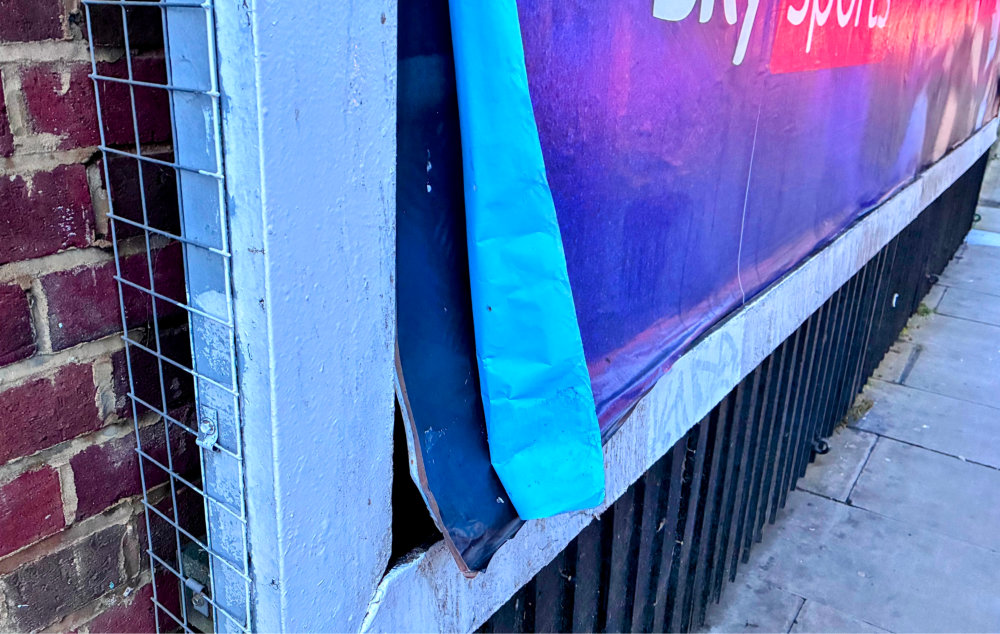
The traditional “blueback” posters are still on the billboard on the other side of the road
The Result?
Because of this cocktail of resins, plastic inks, and heavy glues, traditional billboard waste is frequently rejected by paper mills. Instead of being recycled, it is often sent to landfill or incinerated for energy.
The Correx Difference:
The new plastic boards are made of a single material (Polypropylene). Because they are screwed in (no glue) and the ink can be washed off in an industrial process, the plastic can be ground down and reused cleanly.
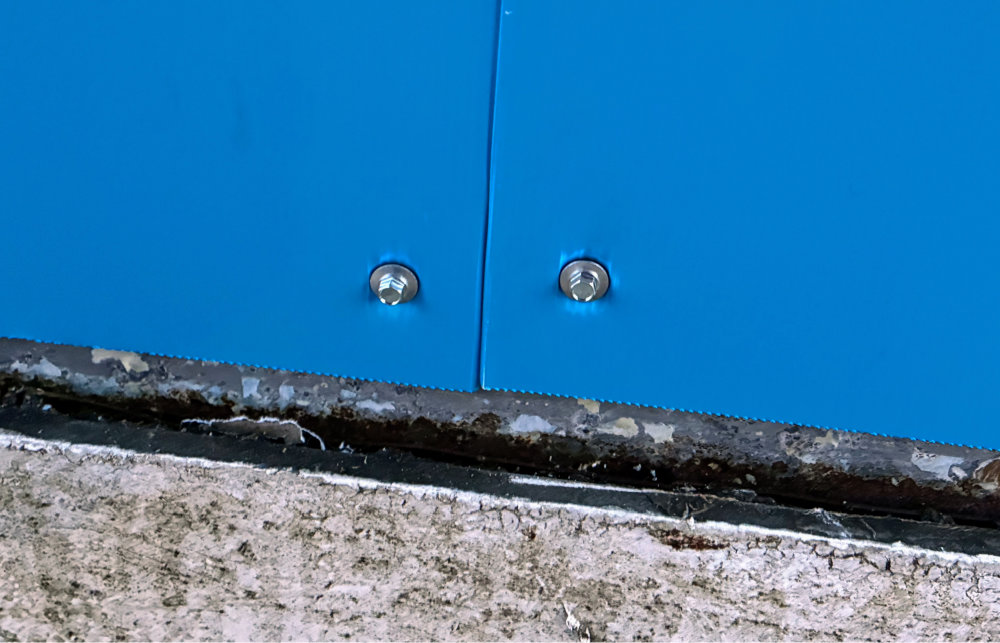 The new boards are mechanically fixed to the billboard under Ruislip Manor bridge, eliminating the need for chemical glues.